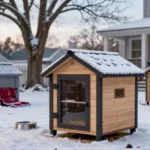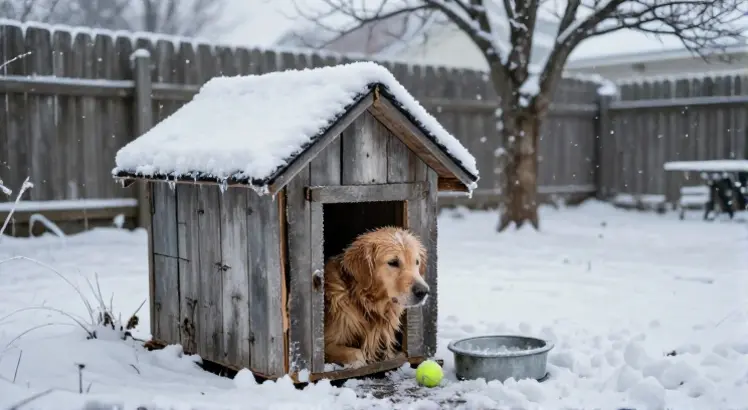

If you keep your dog outdoors part-time or full-time, you’ve probably asked yourself: How cold is too cold for a dog house? It’s a critical question, because while many dog houses provide basic shelter from rain and wind, they aren’t all built to withstand freezing temperatures, and not all dogs handle cold exposure the same way. In this guide, we’ll break down science-backed temperature thresholds, key factors that affect your dog’s cold tolerance, and step-by-step tips to winterize your dog’s outdoor shelter to keep them safe all winter long.

Ketive 55″L Dog House Outdoor Large Breed Extra XL Wooden Dog House with Weatherproof Asphalt Roof, All-Around Iron Frame, Removable Floor, Openable Top Roof, Air Vents Window for Medium to Large Dogs
Check PriceWhat Temperature Is Too Cold for a Dog House?
General safety guidelines state that a dog house is no longer safe for most healthy adult dogs when outdoor temperatures drop below 20°F (-6°C), even if the shelter is insulated. However, this number is not one-size-fits-all: the temperature inside the dog house matters far more than the outdoor temperature reading, and several variables can raise or lower that safe threshold.
Indoor vs. Outdoor Temperature Differences
A basic, uninsulated dog house offers almost no protection from the cold: the temperature inside will be within 2-3°F of the outdoor temperature, even with a door flap. Wind chill makes this worse: a 30°F day with 20mph winds feels like 18°F, which can push an uninsulated dog house into unsafe territory for small breeds.
Insulated dog houses are far more effective. High-quality models with rigid foam insulation in the walls, floor, and roof can hold temperatures 10-20°F warmer than the outdoors. For example, if it’s 30°F outside, a well-insulated dog house will stay between 40-50°F inside, which is safe for most medium and large double-coated breeds. If temperatures drop to 10°F outside, that same insulated house will stay 20-30°F inside, which may still be too cold for short-coated, small, or senior dogs.
Factors That Change Cold Tolerance for Dogs
Ketive 55″L Dog House Outdoor Large Breed Extra XL Wooden Dog House with Weatherproof Asphalt Roof, All-Around Iron Frame, Removable Floor, Openable Top Roof, Air Vents Window for Medium to Large Dogs
Check PriceNot all dogs can handle the same temperatures, even if they have identical dog houses. Below are the most important factors to consider when evaluating if your dog’s shelter is safe:
Key Factors Affecting Your Dog’s Cold Tolerance
- Breed and coat type: Double-coated breeds like Siberian Huskies, Alaskan Malamutes, and Saint Bernards are bred to handle sub-zero temperatures, and may be safe in insulated dog houses down to 0°F (-18°C). Short-coated breeds like Greyhounds, Chihuahuas, and French Bulldogs lose body heat 3x faster than double-coated breeds, and should not be left in dog houses below 45°F (7°C). Small breeds (under 20lbs) also lose heat faster than large breeds, regardless of coat type.
- Age and health status: Puppies under 6 months old, senior dogs over 8 years old, and dogs with chronic conditions like arthritis, diabetes, heart disease, or hypothyroidism cannot regulate their body temperature effectively. These dogs are at risk of hypothermia at temperatures as high as 45°F (7°C), even in insulated shelters. Pregnant or nursing dogs also require warmer shelter, as they need extra energy to keep themselves and their puppies warm.
- Dog house design: A dog house that is too large for your dog will not retain body heat: the space is too big for your dog’s natural warmth to fill. The shelter should be just large enough for your dog to stand up, turn around, and lie down fully stretched. Raised floors (4-6 inches off the ground) prevent cold from seeping up from frozen earth, while door flaps block wind and snow. Cracks or gaps in the roof or walls can let in cold air, making even an insulated house unsafe.
- Bedding material: Wet bedding freezes quickly, which can drop the temperature inside the dog house by 10°F or more. Straw (not hay, which molds easily) and cedar shavings repel moisture and trap body heat, making them the best options for cold weather. Blankets and towels absorb moisture from your dog’s breath and melting snow, then freeze solid, which can cause frostbite on your dog’s paws or belly.
Signs Your Dog Is Too Cold in Their House
Ketive 55″L Dog House Outdoor Large Breed Extra XL Wooden Dog House with Weatherproof Asphalt Roof, All-Around Iron Frame, Removable Floor, Openable Top Roof, Air Vents Window for Medium to Large Dogs
Check PriceDogs are stoic animals that often hide signs of discomfort until they are in severe distress. Check on your outdoor dog every 2-3 hours in freezing weather, and watch for these early warning signs that their dog house is too cold:
- Uncontrollable shivering or trembling
- Whining, barking, or scratching at the door of the house to get out
- Curling into a tight ball with their tail tucked over their nose
- Cold ears, tail, or paws when you touch them
- Lethargy or reluctance to move
- Refusing to enter the dog house when let outside
If you notice these severe symptoms of hypothermia, bring your dog indoors immediately and contact your veterinarian:
- Weak or rapid pulse
- Dilated pupils that don’t respond to light
- Difficulty walking or standing
- Pale or blue gums
- Loss of consciousness
How to Winterize a Dog House for Freezing Weather
You can make almost any dog house safe for temperatures down to 10°F (-12°C) with simple winterization steps. If you’re shopping for a new shelter, we recommend reviewing our guide to the best outdoor dog houses for cold weather to find pre-insulated models that require minimal upgrades.
Essential Winterization Steps
- Add insulation: Cut rigid foam insulation to fit the walls, floor, and roof of the dog house, then cover it with a thin layer of plywood to prevent your dog from chewing and ingesting the foam. Avoid fiberglass insulation, which can irritate your dog’s skin and lungs if they chew it.
- Raise the floor: Attach 4-6 inch wooden blocks to the bottom of the dog house to lift it off the frozen ground. This prevents cold from seeping up through the floor and keeps the house dry during snow melts.
- Install a door flap: Attach a heavy-duty vinyl door flap to the entrance of the dog house to block wind, snow, and rain. Make sure the flap is lightweight enough for your dog to push open easily.
- Seal gaps: Use outdoor-grade caulk to seal any cracks or gaps around the roof, walls, or door frame where cold air can enter. Face the door of the dog house away from the prevailing wind in your area to reduce drafts.
- Upgrade bedding: Remove all blankets and towels, and replace them with fresh straw (available at most farm supply stores) or cedar shavings. Check bedding once a week for dampness, and replace it immediately if it gets wet.
- Add a safe heat source: If temperatures regularly drop below 10°F in your area, add a heated dog bed designed for outdoor use, or a low-wattage ceramic heat emitter (never use a space heater, which is a fire hazard). Plug all heating devices into a GFCI outlet to prevent electrical shocks.
Don’t forget to provide access to fresh, unfrozen water: dogs need more water in cold weather to stay hydrated, and frozen water bowls can lead to rapid dehydration. Use a heated water bowl, and check it twice a day to make sure it’s working.
When to Bring Your Dog Indoors Instead
No dog house, no matter how well insulated, is safe for dogs when outdoor temperatures drop below 0°F (-18°C). At this temperature, even double-coated breeds are at risk of frostbite and hypothermia within 30 minutes of exposure.
You should bring your dog indoors full-time if:
- Temperatures drop below 45°F (7°C) and your dog is a puppy, senior, short-coated, or has a chronic health condition
- Your dog shows any signs of being too cold (listed in the section above)
- Wind chill pushes the felt temperature below 0°F (-18°C)
- Your dog’s water bowl freezes solid for more than 2 hours at a time
If you’re unsure if your dog needs extra protection outdoors, read our guide on whether dogs need jackets in freezing temperatures to learn when to add an extra layer for outdoor time.
Frequently Asked Questions
Can a dog house be too warm?
Yes. If the temperature inside the dog house rises above 70°F (21°C), double-coated breeds can overheat, especially if they have been exercising. Avoid over-insulating dog houses in mild winter climates, and make sure the shelter has small ventilation holes near the roof to allow excess heat to escape.
Is straw or blankets better for dog house bedding?
Straw is far better for cold weather. Blankets absorb moisture from your dog’s breath, melting snow, and rain, then freeze solid, which can drop the temperature inside the house and cause frostbite. Straw repels moisture, holds body heat, and stays warm even in sub-zero temperatures. Always use straw, not hay, which molds quickly and can make your dog sick.
How do I check the temperature inside my dog’s house?
Purchase a cheap indoor-outdoor thermometer (available at most hardware stores for under $10). Place the sensor inside the dog house, and mount the display unit outside the house so you can check the temperature without opening the door and letting warm air escape. Check the temperature twice a day during freezing weather.
Are plastic dog houses safe for cold weather?
Basic plastic dog houses are poor insulators, and will stay within 2-3°F of the outdoor temperature even with a door flap. They are only safe for temperatures above 45°F (7°C) unless you add insulation to the walls, floor, and roof. Rotomolded plastic dog houses are slightly better insulators, but still require upgrades for freezing weather.
How often should I replace straw bedding in a dog house?
Check straw bedding once a week for dampness, mold, or feces. Replace the entire batch of straw every 2-3 weeks, or immediately if it gets wet. Damp straw loses all its insulating properties and can grow mold that makes your dog sick.
Conclusion
To recap: while most healthy adult dogs can safely use an insulated dog house down to 20°F (-6°C), this threshold varies widely based on your dog’s breed, age, health, and the quality of their shelter. Always prioritize the temperature inside the dog house over outdoor readings, and watch for early signs that your dog is too cold.
Start winterizing your dog’s shelter today: add insulation, upgrade to straw bedding, and install a thermometer to monitor inside temperatures. If you’re shopping for a new shelter, check our guide to the best outdoor dog houses for cold weather for pre-insulated options that save you time. For dogs that need extra warmth outdoors, review our guide on whether dogs need jackets in freezing temperatures to keep them safe during walks and outdoor time.
For more severe weather safety tips, follow the ASPCA’s cold weather safety guidelines for dogs. When in doubt, bring your dog indoors: no dog house is worth risking your pup’s health.