
As temperatures rise during the hot summer months, many dog owners worry about their furry friends staying comfortable outdoors. If you have an outdoor dog or a doghouse in your backyard, you need to know how to keep a doghouse cool in summer to prevent heat-related illnesses. Dogs can overheat quickly, and a poorly ventilated or sun-exposed doghouse can become a dangerous oven. In this comprehensive guide, we’ll explore effective strategies to transform your dog’s outdoor shelter into a cool, safe haven.
Whether you have a permanent outdoor kennel or a portable doghouse, the principles of keeping it cool remain the same. From strategic placement and proper ventilation to innovative cooling products, we’ll cover everything you need to ensure your canine companion stays safe when the mercury climbs. Let’s dive into the best practices that every responsible dog owner should know.

Ketive 55\”L Dog House Outdoor Large Breed Extra XL Wooden Dog House with Weatherproof Asphalt Roof, All-Around Iron Frame, Removable Floor, Openable Top Roof, Air Vents Window for Medium to Large Dogs
Check PriceWhy Keeping a Doghouse Cool Is Critical for Your Dog’s Health
Before we explore the solutions, it’s important to understand why a cool doghouse matters so much. Unlike humans, dogs don’t sweat through their skin. They primarily regulate body temperature by panting and through sweat glands in their paw pads. This makes them much more susceptible to heatstroke than we are.
A doghouse that sits in direct sunlight can reach internal temperatures of 20 to 30 degrees higher than the outside air. If it’s 85°F outside, the inside of that doghouse could be over 115°F—a lethal temperature for a dog confined inside. Heatstroke in dogs is a medical emergency that can lead to organ failure and death if not addressed immediately.
Signs of overheating include excessive panting, drooling, lethargy, vomiting, and collapse. By implementing the cooling methods below, you’re not just providing comfort; you’re potentially saving your dog’s life.
1. Strategic Placement: Location, Location, Location
The single most effective way to keep a doghouse cool is to control its exposure to the sun. If your doghouse is movable, relocate it. If it’s permanent, you’ll need to create shade.
Find Natural Shade
Position the doghouse under a large tree or beside a fence that blocks the afternoon sun. The ideal spot offers morning sun but protection from the harsh midday and afternoon rays when temperatures peak.
Create Artificial Shade
If natural shade is scarce, install a shade sail, a tarp, or a patio umbrella over the doghouse. Ensure the covering doesn’t trap heat; there should be airflow between the roof of the doghouse and the shade cover. A well-shaded area can be up to 15 degrees cooler than a sun-exposed spot.
2. Optimize Ventilation for Airflow
Ketive 55\”L Dog House Outdoor Large Breed Extra XL Wooden Dog House with Weatherproof Asphalt Roof, All-Around Iron Frame, Removable Floor, Openable Top Roof, Air Vents Window for Medium to Large Dogs
Check PriceStagnant air equals heat buildup. Proper ventilation allows hot air to escape and cool air to circulate.
- Install Vents: If your doghouse doesn’t have vents near the roof (where hot air rises), drill small holes or install small gable vents on the sides or roof. Cover these with mesh to keep insects and pests out.
- The Door Flap Dilemma: Many doghouses have flap doors to keep warmth in during winter. In summer, these flaps trap heat. Remove the flap entirely during hot months or replace it with a breathable mesh screen that allows air passage while providing a sense of security.
- Elevate the Doghouse: A doghouse that sits directly on the ground absorbs heat from the soil. Use concrete blocks or a sturdy frame to raise the house at least 4 to 6 inches off the ground. This allows air to flow underneath, preventing heat transfer from the hot ground.
3. Reflect the Sun with a Light-Colored Roof
Dark colors absorb heat, while light colors reflect it. If your doghouse has a dark asphalt roof or dark paint, it’s acting like a solar panel.
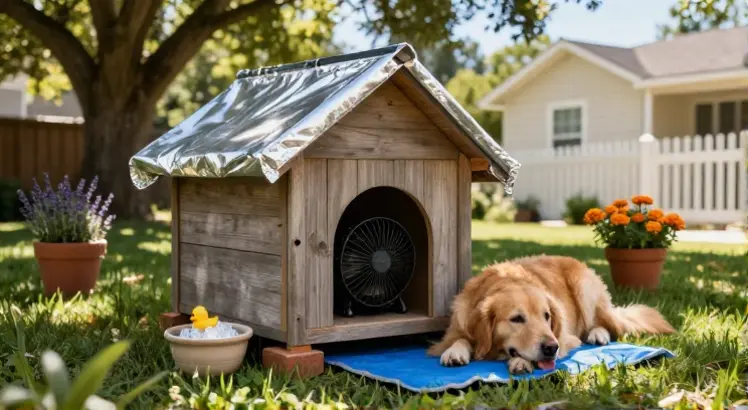
Consider painting the roof with a reflective white elastomeric roof coating. These specialized paints are designed to reflect sunlight and reduce roof temperature significantly. Alternatively, you can attach a sheet of reflective insulation (like radiant barrier foil) to the roof. This simple, inexpensive fix can drastically reduce the internal temperature of the doghouse.
4. Choose the Right Bedding and Flooring
The interior of the doghouse needs to be evaluated for heat retention. Heavy blankets and plush beds are great for winter but dangerous in summer.
Switch to Cooling Bedding
Replace heavy bedding with cooling gel mats, elevated cot beds, or even a simple damp towel (changed frequently). An elevated cot bed is excellent because it allows air to circulate underneath your dog, preventing them from lying directly on hot flooring.
Insulate the Floor
If the doghouse floor gets hot, place a layer of rigid foam insulation covered by a washable floor mat. This creates a thermal barrier between your dog and the hot floor of the house.
5. DIY Air Conditioning and Cooling Hacks
For extreme heat, passive cooling might not be enough. Here are some active methods to lower the temperature inside the doghouse.
- Frozen Water Bottles: Fill plastic bottles with water and freeze them. Wrap them in a old sock or towel and place them in the doghouse. Your dog will appreciate the makeshift ice pack to lean against.
- Clip-On Fans: Battery-operated or solar-powered clip-on fans can be attached inside the doghouse to keep air moving. Ensure the fan is securely fastened and the cords (if any) are out of reach to prevent chewing hazards.
- Misting Systems: For the area around the doghouse, a low-pressure misting system can cool the air through evaporation. However, do not spray the inside of the doghouse directly, as high humidity inside the shelter can actually make it harder for your dog to cool down through panting.
6. Ensure Constant Access to Fresh Water
Ketive 55\”L Dog House Outdoor Large Breed Extra XL Wooden Dog House with Weatherproof Asphalt Roof, All-Around Iron Frame, Removable Floor, Openable Top Roof, Air Vents Window for Medium to Large Dogs
Check PriceHydration is the cornerstone of temperature regulation. Dehydration accelerates heatstroke.
Place multiple water bowls inside and outside the doghouse. Use stainless steel bowls, as they stay cooler than plastic. Consider a gravity-fed water dispenser to ensure a constant supply. In scorching heat, add ice cubes to the water bowl to keep it cool for longer. Check the water level multiple times a day, as dogs drink significantly more water when it’s hot.
7. Landscape for Coolness
The ground around the doghouse plays a role in the microclimate. Avoid placing the doghouse on artificial turf, concrete, or asphalt, as these materials radiate immense heat.
Instead, place the doghouse on a grassy area if possible. Grass has a natural cooling effect. If grass isn’t an option, use pea gravel or sand. These materials don’t retain heat as much as concrete and allow your dog to dig a shallow “cooling pit” if they feel the need.
8. Consider a Doghouse Air Conditioner or Swamp Cooler
For owners in extremely hot climates, a standard doghouse might need mechanical help. Small, portable air conditioners exist, but they require power and can be expensive. A more energy-efficient option for dry climates is a swamp cooler (evaporative cooler). These devices use a fan and a wet pad to cool the air. They are effective but only work in low-humidity environments.
9. Regular Maintenance and Grooming
A clean doghouse is a cooler doghouse. Dirt and debris can trap heat and block ventilation.
Additionally, ensure your dog is properly groomed for the season. While you should never shave a double-coated breed (as their coat actually insulates them from heat), regular brushing to remove the undercoat helps with air circulation to the skin. Providing a clean, well-groomed environment reduces the risk of heat stress.
10. Know When to Bring Them Inside
No matter how many cooling tricks you use, there is a limit to what a doghouse can provide. When temperatures soar above 90°F (32°C), it is safest to bring your dog indoors where there is air conditioning. If you must be away, ensure your dog has access to a climate-controlled space like a garage or a mudroom with fans or AC.
Comparing Doghouse Cooling Methods
To help you decide which methods are best for your situation, here is a comparison of the most common cooling strategies:
- Shade and Ventilation: Low cost, passive, essential baseline. Best for mild to moderate heat.
- Elevated Cots and Cooling Mats: Moderate cost, very effective for direct dog comfort. Best for all climates.
- Misting and Fans: Moderate cost, requires power or batteries. Best for lowering ambient temperature in the doghouse vicinity.
- Air Conditioning: High cost, high energy use. Best for extreme heat waves and vulnerable dogs (elderly, brachycephalic breeds).
Frequently Asked Questions (FAQs)
What is the fastest way to cool down a doghouse?
The fastest way is to move it into the shade and improve airflow. Open any vents, remove door flaps, and place a battery-operated fan inside. Placing frozen water bottles inside will also drop the temperature quickly.
Can I put a fan inside my dog’s house?
Yes, but it must be secured properly. Use a heavy-duty, chew-resistant fan designed for outdoor or workshop use. Ensure your dog cannot pull it down or chew on the wires. Battery-operated fans are the safest option for doghouses.
Is it okay to hose down the doghouse to cool it?
Hosing down the exterior and the roof can help through evaporative cooling, but avoid soaking the interior bedding. A wet, humid interior can make your dog even hotter and promote mold growth. Focus on wetting the roof and the ground around the house.
How do I know if my dog is too hot in their house?
Feel the doghouse walls and floor. If they are hot to the touch, it’s too hot inside. Watch your dog for signs of heat stress: heavy panting, glassy eyes, rapid pulse, and unwillingness to move. If you suspect overheating, move your dog to a cool area immediately and offer water.
Conclusion: Prioritize Your Dog’s Summer Safety
Knowing how to keep a doghouse cool in summer is a vital skill for any pet owner with an outdoor space. By combining multiple strategies—shade, ventilation, elevation, and cooling accessories, you can create a safe retreat for your dog even on the hottest days. Remember that prevention is the best medicine; don’t wait for a heatwave to hit before making these changes. Start preparing your doghouse for summer today to ensure your furry friend stays happy, healthy, and cool all season long.
For more information on protecting your pets from environmental extremes, consult resources from the ASPCA’s hot weather safety guide. Stay vigilant, keep those water bowls full, and enjoy the summer safely with your canine companion.