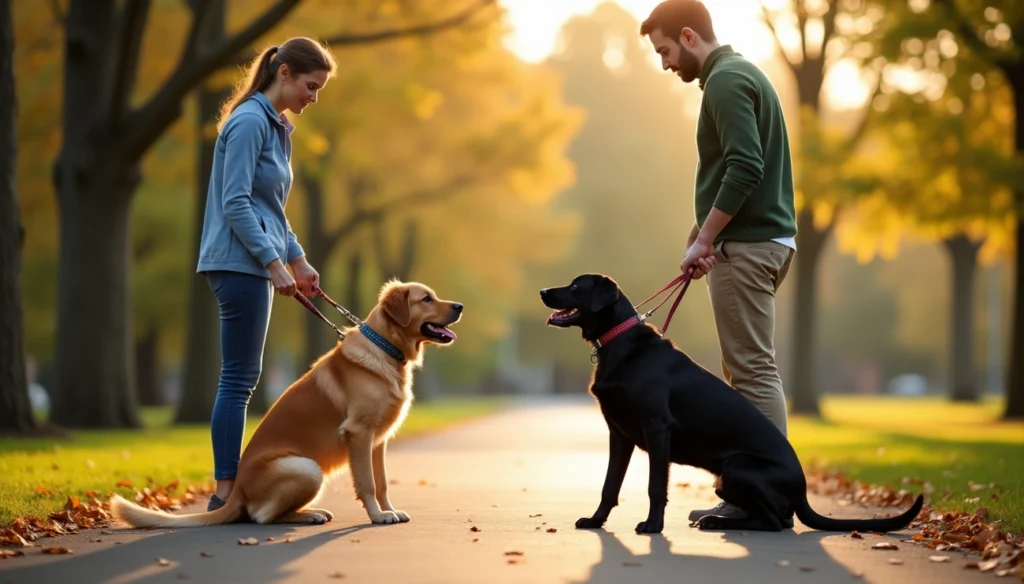

Train your dog to meet other dogs by starting with calm, controlled introductions on neutral ground. Keep both dogs leashed, reward relaxed behavior with treats, and gradually shorten the distance between them. Allow brief sniffing, then separate before tension builds. Repeat until your dog stays calm around other dogs.
Start with Calm, Controlled Introductions
First impressions between dogs can set the tone for their entire relationship. After understanding why socialization matters, the next step is knowing how to facilitate those initial meetings properly. Creating positive first encounters is essential when learning how to train your dog to meet other dogs successfully.
How to properly introduce dogs on neutral ground
The location of your dogs’ first meeting plays a crucial role in their initial reaction to each other. Choose neutral territory where neither dog feels territorial or protective. Ideally, this should be a park, open field, or quiet street away from both dogs’ homes.
When introducing a new dog to your resident dog, consider taking your dog along when picking up the newcomer. This allows them to share a car ride (in separate crates) and enter your home together, which can prevent territorial reactions.
For owners with multiple resident dogs, it’s best to introduce them to a new dog one at a time. This prevents overwhelming the newcomer and gives each resident dog individual attention during this important process.
Using parallel walks to build comfort
Parallel walking is one of the most effective techniques for introducing dogs, especially for those who might be reactive or anxious around other canines. This method allows dogs to be in each other’s presence without the pressure of direct interaction.
To implement a successful parallel walk:
- Start at a comfortable distance between dogs (25-30 feet apart for most dogs, farther for reactive ones)
- Walk in the same direction, side by side but separated
- Gradually decrease the distance as dogs remain calm (about 5 feet at a time)
- Reward calm behavior and looking away from the other dog with treats
- Allow one dog to walk behind the other, then switch positions
For many dogs, being slightly behind the other dog creates less stress than walking directly alongside. Additionally, walking helps diffuse tension by giving dogs a task to focus on besides each other.
Letting dogs set the pace
When dogs appear relaxed with parallel walking, you can allow brief sniffing interactions. Let them circle and sniff each other for a few seconds, then lead them away. This mimics natural dog greeting patterns, where they typically circle and sniff each other’s rear ends.
If you notice any stiffening in the dogs’ bodies, immediately create more distance. Similarly, if they’ve been face-to-face for more than two seconds, redirect them to prevent tension from building.
Build Positive Associations with Other Dogs
Creating positive associations forms the backbone of successful dog-to-dog interactions. When I teach owners how to train their dog to meet other dogs, I emphasize that rewards communicate clearly what we want from our canine companions.
Using treats and praise for calm behavior
I recommend starting with continuous reinforcement—rewarding every instance of calm behavior. Consequently, as your dog becomes more reliable, switch to intermittent reinforcement where you reward unpredictably. This unpredictability actually strengthens the behavior more effectively than constant rewards.
For maximum effectiveness:
- Pair verbal praise (“good dog”) with treats to build stronger associations
- Keep treats small (pea-sized) so your dog can eat quickly and refocus
- Vary your rewards (different treats, toys, play) based on what motivates your specific dog
Remember to keep treats within 10% of your dog’s daily calorie intake to maintain proper nutrition.
Avoiding punishment for fear-based reactions
Punishing a dog for growling, barking, or lunging at another dog is counterproductive and potentially dangerous. These behaviors are symptoms of underlying fear or anxiety, not disobedience.
When your dog shows fear-based reactions toward other dogs, consider:
- Creating more distance from the trigger dog
- Offering high-value treats when they notice other dogs (before reacting)
- Using familiar cues to redirect their attention
How to teach dog to greet other dogs calmly
Start by preventing your dog from greeting every dog they see on leash. Ironically, dogs routinely allowed to greet others on leash often become “frustrated greeters” who appear reactive when they can’t say hello.
For successful greetings:
- Approach other dogs on a loose leash—tight leashes create tension
- Teach a reliable “watch me” cue for maintaining attention
- Practice a “cross” or “this way” cue to move away from challenging situations
- Reward attention to you in the presence of other dogs
Through these techniques, I’ve helped countless dogs learn that focusing on their humans around other dogs leads to good things, creating the foundation for peaceful walks and harmonious interactions.
Watch Body Language and Manage the Environment
Reading your dog’s silent signals is vital when introducing them to other canines. Mastering the art of canine body language interpretation will transform how you train your dog to meet other dogs.
Signs of stress or discomfort
A dog’s body reveals volumes about their emotional state. Watch for these stress indicators during introductions:
- Raised hackles – fur standing up along the back (piloerection) signals arousal, though not always negative
- Whale eye – visible whites of the eyes indicating anxiety or stress
- Avoidance behaviors – looking away, avoiding eye contact, or turning their body away
- Tense posture – weight shifted backward, rounded topline, or crouched stance
- Mouth signals – tight closed mouth, excessive lip-licking, yawning out of context
Additionally, subtle signs like frequent shaking off (as if wet), excessive sniffing, or scratching indicate a dog trying to self-soothe. Recognizing these early warnings prevents situations from escalating.
Creating space during walks
Whenever you notice stress signals, immediately create distance between the dogs. This isn’t admitting defeat—it’s respecting your dog’s communication.
On trails or at parks, move aside when approaching other dogs, allowing at least double the space if requested by another owner. For reactive dogs, simply standing up to move away might trigger a reaction if they’re already over threshold.
When to step in and redirect
Intervene without hesitation if you observe:
- Direct staring longer than two seconds
- Frontal body alignment with weight forward
- Rapidly escalating intensity without self-interruption
- Showing teeth while barking or growling
To redirect effectively, use a cheerful voice to call your dog, calmly move in opposite directions, or position yourself as a visual barrier. Afterward, reinforce calm behavior with high-value treats or engage them in sniffing activities to lower arousal.
Expand Socialization Gradually
Once your dog shows comfort with one-on-one canine interactions, gradually expanding their social circle becomes the next milestone. The journey of teaching your dog to meet other dogs successfully doesn’t end with basic introductions—it evolves as your dog gains confidence.
Introducing your dog to group settings
Gradual exposure is the cornerstone of successful group introductions. Start by arranging controlled meetings with one familiar, well-behaved dog before introducing a second dog. As your dog builds confidence, following this step-by-step approach helps prevent overwhelm:
- Begin with parallel walking alongside another calm dog
- Progress to brief, supervised interactions with the same dog
- Gradually extend interaction duration as comfort grows
- Introduce a second familiar dog only after mastering one-on-one interactions
For older dogs who missed early socialization, patience becomes even more essential. According to experts, socializing adult dogs requires introducing potential triggers gradually, followed by immediate rewards for calm behavior.
Dog parks vs. playdates
Playdates provide controlled environments where dogs interact with known, compatible companions. I recommend starting with one-on-one playdates before considering dog parks. A useful technique is the “compatibility test”—walking both dogs parallel for about 10 minutes. If they can ignore each other after several repetitions, they’re likely ready for play.
Dog parks, conversely, feature unpredictable environments with varying dog personalities. For your first dog park visit, keep your dog leashed outside the fence, simply observing the activity. Only venture inside on subsequent visits if your dog appears relaxed, maintaining leash control until they demonstrate comfort.
How to get your dog used to other dogs over time
Consistency forms the bedrock of long-term socialization success. Short, frequent, positive exposures prove more effective than prolonged sessions that might overwhelm your dog.
Gradually decrease the distance between your dog and others as they show relaxation signals rather than stress. Always reward calm behavior with treats and praise, strengthening positive associations with each interaction.
Remember that approximately 85% of dogs prefer having just a few canine friends rather than socializing with every dog they meet. Additionally, dogs’ social preferences often change between ages 2-3 years, typically becoming more selective about playmates.
Conclusion
Training your dog to meet other dogs successfully requires patience, consistency, and understanding of canine behavior. Throughout this guide, we’ve explored the critical importance of early socialization and how it shapes your dog’s future interactions. Nevertheless, dogs of any age can learn to navigate social situations comfortably with the right approach.
Positive reinforcement undoubtedly works wonders when teaching dogs to remain calm around other canines. Treats, praise, and patience reward the behaviors we want to see, while punishment for fear-based reactions only intensifies problems. Accordingly, understanding your dog’s body language becomes essential for managing introductions effectively—creating space whenever you notice signs of stress prevents negative experiences.

I’ve loved dogs all my life and have cared for many different breeds over the years. Here, I share simple tips, stories, and helpful advice for all dog lovers. Whether you’re a new pet parent or a lifelong dog fan, you’ll find something useful and fun on my site.